Herbal Ley for Horses: SAM3 & GS4 Options for Healthy, Laminitic and Metabolic Horses
Updated: Jun 30
Can Horses Graze a Herbal Ley?

If you're searching for a herbal ley for horses, you've probably come across options labelled SAM3, GS4, or Sustainable Farming Incentive Herbal Leys.
These seed mixes are primarily designed to meet agricultural scheme requirements and support livestock production.
Some may also be suitable for horse grazing, but choosing a herbal ley for horses involves different considerations to choosing one for cattle or sheep.
Rather than asking whether a herbal ley is "horse safe", it's more useful to ask whether it creates the kind of grazing system your horses need.
What Is a Herbal Ley?
A herbal ley is a multi-species pasture combining:
grasses
legumes
herbs and wildflowers
The goal of typical agricultural herbal leys is to improve soil structure, fertility, and forage yield. While this works well for livestock, horse grazing needs a different ecological and nutritional approach, one that prioritises soil structure, species diversity and forage nutrition, with lower NSC, lower energy and higher fibre species being prioritised over yield.
Why Not All Herbal Leys Suit Every Horse
Horses, especially those with laminitis or equine metabolic syndrome (EMS):
graze selectively
apply high hoof pressure to pastures
are sensitive to high non-structural carbohydrates (NSC) such as sugars and fructans
Many agricultural herbal leys contain relatively few species compared with traditional species-rich grassland, and they are often designed to maximise livestock performance rather than meet the nutritional and behavioural needs of horses.
Why Biodiversity Matters for Horse Pastures

Multi-species pastures:
Broaden nutrient profiles and encourage foraging
Reduce NSC spikes by balancing plant types
Increase ecological resilience and drought tolerance with different root depths
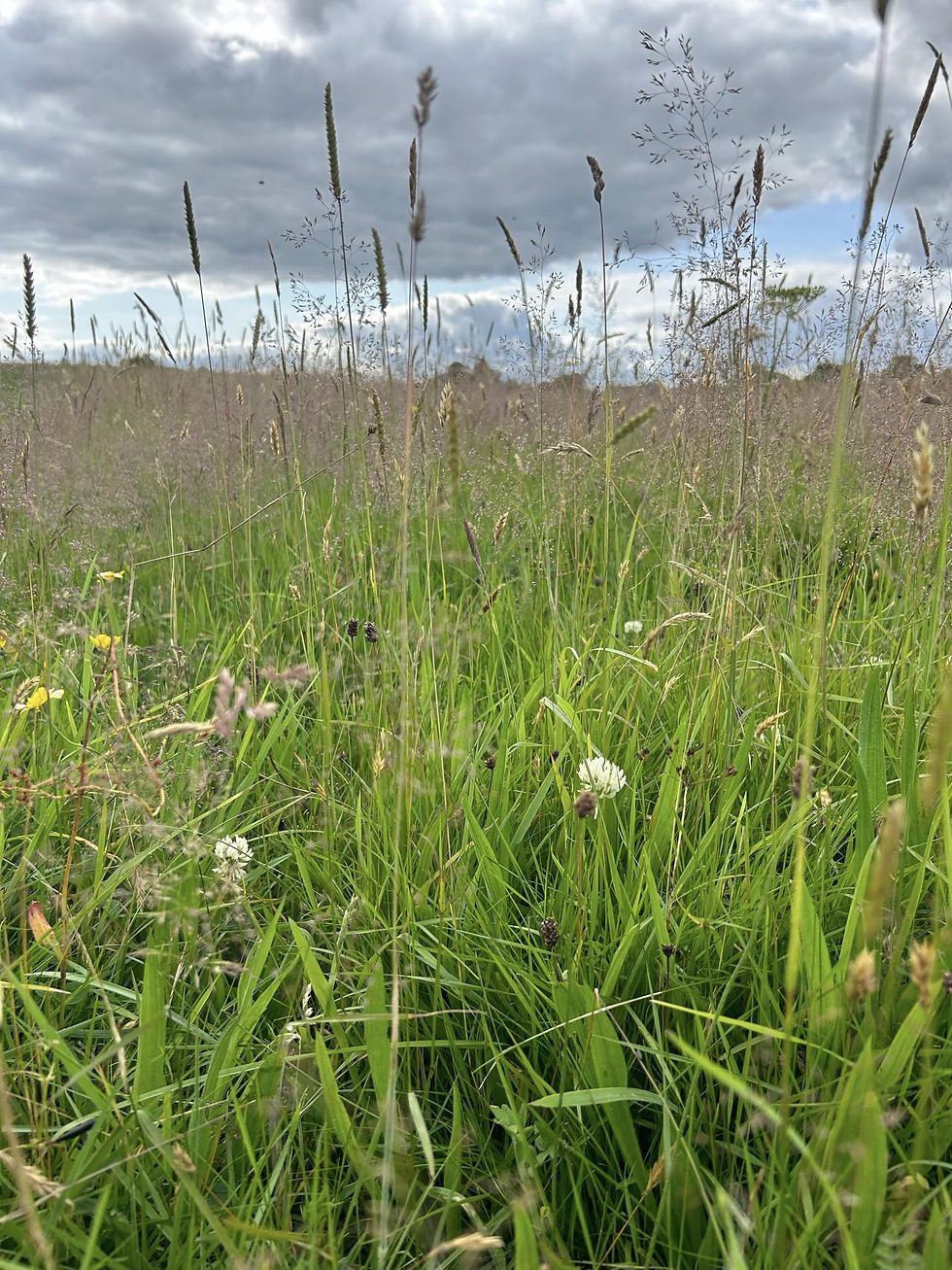
Traditional UK meadows often contained no less than 20% wildflowers, with some meadows hosting 30–40 species per square metre (Plantlife), supporting both soil health and horse grazing needs. Modern species-poor pastures fail to provide the benefits of these old wildflower meadows.
What Should Horse Owners Look For in a Herbal Ley?
Consideration | Many Agricultural Herbal Leys | |
Number of species | ~6–10 | 20+ |
Plant types | Mainly productive grasses, legumes and herbs | Grasses, legumes, herbs, and wildflowers selected to provide a variety of fibres and phytonutrients while supporting long term grazing resilience |
Sugar / NSC profile | High during spring growth, designed for fast growth and high yield | Relatively lower, designed for slow but steady growth |
Soil / ecological function | Improved fertility and productivity | Supports soil structure, biodiversity, and drought resilience. Doesn't rely on fertilisers |
Grazing suitability | Optimised for sheep/cattle | Optimised for horses, and suitable for good doers, EMS and laminitic prone (always manage grazing carefully) |
Scheme compatibility | SAM3 / GS4 / SFI / Countryside Stewardship | SAM3 / GS4 / SFI / Countryside Stewardship, eligible for horse-owning land use |
Management | Often intensive, quick regrowth focus | Designed for selective grazing, minimal soil compaction, mixed plant heights |
Outcome for horses | Can trigger metabolic issues if grazed freely | Designed to support more balanced grazing systems rather than maximise forage production. No seed mix completely removes risk of obesity or laminitis- manage grazing carefully) |
Can Horses Graze a Herbal Ley Under SFI or Countryside Stewardship?
Yes — but the choice of seed mix is critical.
Landowners who run liveries, rent grazing to horse owners, or keep horses on their land may qualify for CSAM3 or CGS4 herbal ley options. However, most mixes marketed for compliance are designed for livestock and contain too few species for horse health.
Horses benefit from grazing systems that consider pasture composition alongside horse health, grazing management and soil ecology.
How to Choose the Right Herbal Ley for Horses
There isn't one perfect herbal ley for every horse or every piece of land. The right choice depends on your soil, grazing management, horse health and long-term objectives.
Our Biodiverse Grazing Mix was developed specifically around the nutritional, behavioural and ecological needs of horses rather than the production goals of livestock systems.
Whether you choose our Biodiverse Grazing Mix or another species-rich option, understanding why different mixtures behave differently will help you make better long-term decisions than marketing claims alone.
If you'd like to understand how to assess your own pasture before choosing a seed mix, our recorded webinars and educational courses explain how horses, plants, soils and management interact, helping you make confident decisions for your own land.
Key Takeaways
The UK is seeing increasing interest in species-rich pastures for horses.
Herbal leys designed for livestock and those designed for horses often have different priorities.
Species diversity is only one part of the picture. Horse health, grazing management and soil function also influence outcomes.
Government schemes such as SAM3 and GS4 can create opportunities to establish more diverse horse pasture where eligibility requirements are met.
The best seed mix is the one that fits your horses, your land and your long-term management goals.
Horse owners and land managers have the opportunity to combine regenerative land practices, biodiversity, and horse welfare in one system.
Frequently Asked Questions
What is a herbal ley?
A herbal ley is a temporary or longer term pasture sown with a mixture of grasses, legumes, herbs and wildflowers. Traditionally, herbal leys have been used in livestock farming to improve soil structure, increase forage production, support pollinators and build resilience to drought.
Most commercially available herbal leys have been developed for cattle and sheep. While many of the plant species can also be grazed by horses, the nutritional priorities of horses, particularly good doers and those prone to laminitis, are often different from those of productive livestock.
Can horses graze a herbal ley?
Yes, horses can graze a herbal ley, but suitability depends on the species included and how the pasture is managed. Many agricultural herbal leys contain productive grasses selected for livestock performance. A herbal ley designed specifically for horses is more likely to prioritise diverse, lower NSC grasses alongside appropriate herbs, legumes and wildflowers to create a more balanced grazing environment.
Regardless of the seed mix used, grazing management, horse metabolism, weather and soil conditions all influence whether a pasture is suitable for an individual horse.
Are SAM3 and GS4 herbal leys suitable for horses?
Some SAM3 and GS4 herbal leys can be grazed by horses, but many standard options were designed with livestock rather than horses in mind.
If your land is entered into an environmental scheme, it's worth checking both the scheme requirements and the seed mixture itself. A mix that meets scheme rules can still be selected with horse welfare in mind by choosing species that support diverse, resilient grazing systems rather than simply maximising forage production.
Can a herbal ley help horses prone to laminitis?
A carefully designed herbal ley may help support a lower risk grazing system by increasing plant diversity and reducing reliance on highly productive agricultural grasses.
However, no herbal ley is "laminitis safe." Laminitis risk depends on many interacting factors, including pasture management, weather, horse body condition, insulin regulation and overall energy intake. A diverse pasture should be viewed as one part of a wider grazing management strategy rather than a complete solution.
Can horse owners use Sustainable Farming Incentive (SFI) herbal leys?
In many situations, yes. Some horse owners and land managers may be eligible for Sustainable Farming Incentive (SFI) or other environmental scheme options where horses form part of the land management system.
Eligibility depends on the specific agreement and current scheme rules, so it's important to check the latest guidance. Where appropriate, choosing a horse-specific species-rich seed mix can help meet both environmental objectives and equine grazing needs.


Comments