How to Identify Horse Pasture Plants Correctly
Updated: Aug 26
Horse owners often worry about what is growing in their pastures. Concerns about toxicity, competition rules and horse safety can make it tempting to remove any unfamiliar plant, but removing plants before they are correctly identified can lead to unnecessary biodiversity loss.
Correct plant identification allows you to make informed decisions: keeping beneficial species, removing genuinely toxic plants and creating a safer, more diverse grazing environment for horses.
Why Horse Pasture Plant Identification Matters
A misidentified plant can lead to unnecessary panic or, conversely, to missed risks.
Many plant identification apps promise to help horse owners identify pasture plants from a photo. These tools can be useful as a starting point, especially when you’re learning, but they’re not infallible. Lighting, angles, stage of growth, and even the device you’re using can all affect results. It's worth remembering that the apps themselves rely on users correcting its future accuracy. This only works if the users themselves are correct in their identification.
To correctly identify a plant, we need to look at more than one part of the plant. Asking an app to Identify a plant from a leaf photo, flower photo, stem photo and root photo can often lead to the app suggesting several different plants.
Incorrect plant ID often has wider consequences:
Horses miss out on beneficial plants because they’re mistakenly considered “toxic.”
Pasture diversity is reduced, limiting dietary variety and forage quality.
Wildlife suffers, as many “weeds” are important food sources for pollinators and other creatures.
Why Removing Plants Without Correct Identification Can Harm Biodiversity

When plant ID confidence is low, blanket rules like “remove all yellow-flowering plants” often emerge. While well-intentioned, these rules are harmful:
To horses: Removing diverse plants reduces forage variety, which can increase reliance on high-sugar grasses. This can cause digestive upset and exacerbate metabolic issues like obesity, EMS, and insulin dysregulation.
To wildlife: Many flowering “weeds” are vital pollinator resources. Removing them disrupts the local ecosystem.
To soil and pasture health: Less plant diversity leads to weaker root systems, poorer soil structure, and reduced resilience to drought or heavy grazing.
Learning to identify pasture plants correctly helps horse owners move away from blanket removal and towards evidence-based pasture management.
Balancing Safety and Diversity
Correct plant identification allows you to:
Keep beneficial species in your pasture.
Remove genuinely toxic plants.
Support horse health through a diverse diet.
Maintain a resilient, balanced ecosystem.
Blanket removal strategies are rarely helpful. Removing "all yellow plants" removes
beneficial plants like dandelions. Dandelions are a highly nutritious forage, offering vitamins, minerals, and fibre that support gut health, and they also play an important ecological role.
In a balanced, diverse pasture, the risk of toxicity is naturally diluted, while the benefits for horses and the environment are maximized.
To learn more about toxicity in pastures, read our blog, "Are we focussing on the wrong plants?"
How to Identify Horse Pasture Plants Safely
Start with reliable field guides and local references for your area. Useful information can be found from Plantlife.org, the University of Dundee Visual-flora guide or the nativeplanttrust.org.
Use plant ID apps as a supplementary tool, not the sole source. Take multiple photos of flowers, leaves, stems, and roots.
Look for key identifying features: leaf shape, vein patterns, stem hairs, flower colour, number of petals, and root type. See the images below to identify the parts of a plant that will help you identify it.
Observe the plant in context: growth pattern, surrounding species, and seasonal changes provide valuable clues.
Use a key such as the native plant trust simple key or the visual-flora key to identify the plant with the features you have observed.

Parts of a plant used to help identify the plant. Image Credit: PlantLife 
Leaf Arrangement is important to help identify a plant. Image Credit: PlantLife 
Leaf Shape is important to help identify a plant. Image Credit: PlantLife
Example 1
Cleavers, Ladys bedstraw and Hedge bedstraw have similar leaves. Cleavers is "sticky" so its easier to identify. Meanwhile ladys bedstraw and hedge bedstraw look very similar until they flower. Lady's bedstraw has yellow flowers, whereas Hedge bedstraw has white flowers. When bedstraw isn't flowering you can guess the species based on its location. Hedge bedstraw prefers to live near hedges, whereas ladys bedstraw is often more out in the open. However, this guess cannot be confirmed until the plant flowers.

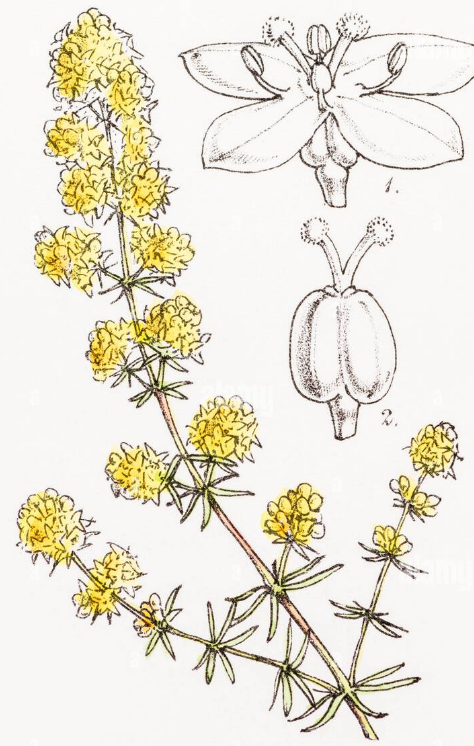

Example 2
Alsike Clover and Red Clover flowers can look very similar. Alsike clover is toxic to horses whereas red clover can be eaten safely as past of a balanced diet. It provides protein and phytonutrients to support tissue repair in the healthy horse and is suitable for good doers in moderation. Alsike clover has a white/pink flower and green leaves. Red clover has a pink/red flower and also has green leaves but those leaves have a white V shaped watermark, making it easy to tell it apart from aslike clover. Note that white clover also have a V shaped watermark on its leaves and while safe in moderation, is genereally not suitable to be sown into horse grazing areas as it spreads easily, making it hard to ensure its a moderate part of the diet.

Correct plant identification builds confidence. Confidence allows you to keep beneficial species, remove genuinely risky ones, and support both your horses and your land. Blanket removal strategies are rarely helpful. They reduce diversity, harm the ecosystem, and ultimately limit your horses’ access to safe, nutritious forage.
By combining careful observation, reliable references, and practical tools, you can identify plants with confidence and make informed decisions that improve horse welfare and pasture resilience.
Increasing Pasture Diversity After Correct Identification
Once you understand which plants are already growing in your pasture, you can make better decisions about whether additional species are needed. For many horse owners, improving biodiversity starts by protecting existing plants and improving grazing management. However, where pasture diversity is low, carefully selected seed mixes can help introduce suitable horse-safe species.
Our Biodiverse Grazing Mix for Horses is designed as a general-purpose starting point for equestrian pasture. It combines grasses, legumes, herbs and wildflowers to increase botanical diversity while supporting resilient grazing systems.
For existing pasture where you want to introduce additional wildflower species into specific areas, our Wildflower Grazing Mix for Horses provides a targeted option for increasing non-grass diversity.
Both mixes have been developed specifically with horse grazing in mind, helping owners improve pasture diversity without introducing unsuitable species.
Learn More
Are we focussing on the wrong plants? - Blog Article
How to Design a Horse Paddock That Supports Horses, Soil and Wildlife - Blog Article
Horse-Safe Biodiverse Seed Mixes – Support diversity in your pasture with carefully selected species.
Plant Life Plant Identification resource - Links to PlantLife.org resources
Visual-Flora - Plant ID key, University of Dundee
Go Botany - Plant ID key, Native plant trust
Frequently Asked Questions
How do I identify plants in my horse pasture?
The safest way to identify pasture plants is to examine several features including leaves, stems, flowers and growth patterns and use them to identify your plant with a key. Plant identification apps can be useful, but they should be treated as a starting point rather than the only source of identification.
Are plant identification apps accurate?
Plant identification apps can be helpful but they are not always correct. Similar-looking species, poor image quality and different growth stages can lead to incorrect results. Confirm important identifications using reliable field guides or botanical resources.
Should I remove every weed from my horse pasture?
No. Many plants commonly called weeds contribute to biodiversity, provide forage variety and support wildlife. Plants should be assessed individually rather than removed based on appearance alone.
Are all yellow flowers toxic to horses?
No. Flower colour alone cannot determine whether a plant is toxic. Several yellow-flowering plants, including dandelion and birdsfoot trefoil, can form part of diverse horse pasture.
Why is biodiversity important in horse pasture?
Plant diversity provides horses with access to a wider range of fibres, minerals and naturally occurring plant compounds while supporting healthier soils and more resilient grazing systems.


Comments