How to Add Wildflowers to Horse Pasture (Without Starting Again)
Updated: Jun 30
When it comes to looking after horses and land, one size does not fit all.
Every pasture is different. Soil fertility, drainage, existing grasses, grazing pressure, horse health and your long term goals all influence which pasture management methods are likely to work best.
When it comes to introducing wildflowers into horse pastures, rather than asking Which method is best?, a better question is: Which method makes the most sense for this pasture?
At Hoof & Habitat, we don't believe there is one right way to manage horse pasture. There are many ways to do each job and most have pros and cons, we give you the information you need so you can make confident decisions for your own horses, land and circumstances.
Whether you have heavy clay that stays wet all winter, light sandy soil that dries out every summer, a laminitis prone horse, or simply want to increase biodiversity, there are several ways to establish wildflowers suitable for horse pasture into existing fields.
Why Add Wildflowers to Horse Pasture?
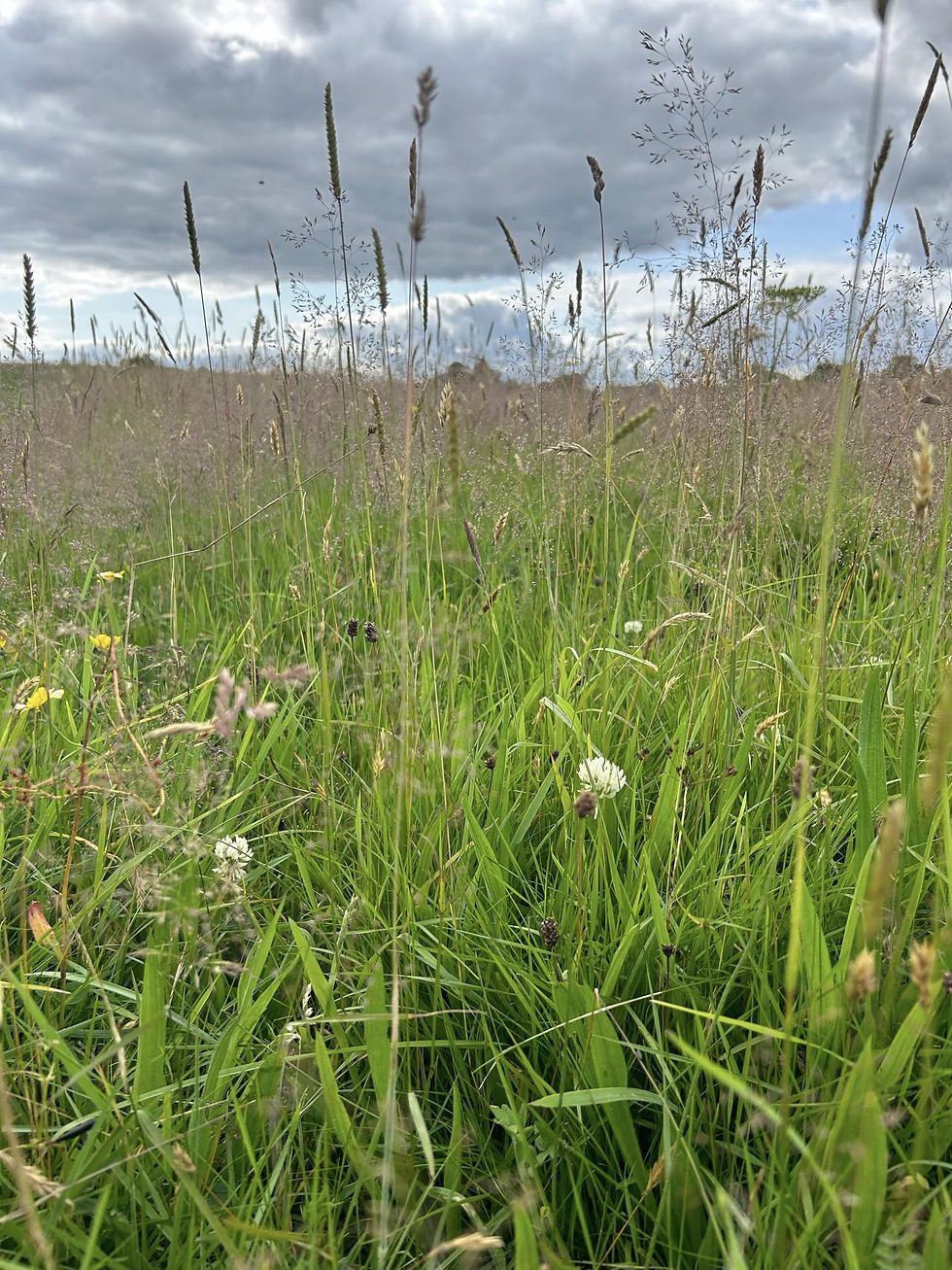
Wildflowers do far more than make a pasture look beautiful. Different species flower at different times, root to different depths and interact with soil in different ways. Together they create a more diverse and resilient grazing ecosystem.
For horses, this can provide greater foraging enrichment, a wider variety of natural plant compounds, minerals and antioxidants, and opportunities to express more natural grazing behaviour.
For the land, diverse rooting patterns help improve soil structure, increase water infiltration, support soil biology and create valuable habitat for pollinators and other wildlife.
The goal isn't simply to grow flowers. It's to gradually build a pasture that functions more like a healthy ecosystem than a grass monoculture.
It's worth remembering that not every pasture needs to become a species rich meadow. Many grazing systems benefit from introducing diversity gradually or creating species rich areas in selected parts of the grazing system. As with all equine pasture management, context matters.
Establishing wildflowers takes patience. We're asking nature to rebalance after years, and often decades, of grazing, compaction and elevated soil fertility. Many traditional meadow wildflowers naturally compete best in lower fertility soils where vigorous grasses are less dominant. Most improved horse pastures are the opposite: densely rooted, nutrient rich and dominated by productive grasses that rapidly capture light, water and nutrients. Reducing this grass competition is usually the first step towards successful establishment.
Choosing Horse Safe Wildflowers
Start by choosing species that suit your soil, drainage, sunlight, rainfall and management goals rather than simply selecting the prettiest mix. Some wildflowers naturally prefer heavy clay soils, while others thrive on free draining sandy ground. Choosing species adapted to your conditions gives them the best chance of establishing successfully.
Many native wildflowers suitable for horse pasture can thrive across a wide range of soil types and conditions, making a carefully designed general purpose mix an excellent place to start.
If you compete under FEI or affiliated competition rules, always check whether any plant species contain naturally occurring compounds that could cause a positive doping test.
What is the Best Way to Add Wildflowers to Horse Pasture?
The best method depends on your pasture. For wildflowers to establish successfully, they need a little help against the vigorous grasses that already dominate most horse fields. The aim is to reduce grass competition and expose small areas of soil for the wildflower seed to take hold.
So, each establishment method works by changing one or more ecological conditions that currently favour grass over wildflowers. Some reduce grass competition, others expose bare soil, or temporarily weaken vigorous grasses. Some improve seed to soil contact.
Understanding why each method works makes it much easier to decide which approach is most appropriate for your own pasture.
Here are five effective ways to do it — each with its own benefits and risks.
The Yellow Rattle Method
Benefits: Yellow rattle (Rhinanthus minor) is a semi-parasitic plant that naturally weakens cultivated grasses by drawing nutrients from their roots. It’s a brilliant ecological tool for rebalancing pastures and encouraging wildflower diversity. It doesn’t damage soil, and because it’s an annual, you can control its return by mowing before it seeds.
Risks: It is mildly toxic if consumed in quantity, but horses rarely eat it. Avoid grazing heavily while it’s flowering and seeding.
Tips: Sow in colonies and not as part of a wildflower mix a year before sowing the wildflower mix.
The Overgraze Method
Benefits: Carefully extending grazing for a short period can temporarily weaken dominant grasses and create opportunities for wildflower establishment. This is very different from chronic overgrazing. The aim is simply to reduce competition before allowing the pasture to recover. It requires no equipment and uses your horses’ natural behaviour to your advantage.
Risks: Long term overgrazing damages soil structure, increases compaction, reduces plant diversity and encourages undesirable species. It shouldn't become an ongoing management strategy.
Tips: If soil has become compacted, species with deep taproots, such as wild carrot or dandelion, can help improve soil structure over time alongside appropriate grazing management. Wildflowers with deep taproots can be found in our wildflower mixes.
The Harrow Method
Benefits: Chain or tyne harrowing lightly disturbs the topsoil and removes loose grass, creating bare patches where wildflowers can germinate. It’s quick and effective when done carefully.
Risks: If done too deeply or in wet weather, it can damage soil structure and lead to erosion.
Tips: Aim to create enough exposed soil for good seed to soil contact while leaving most of the existing vegetation intact to protect the soil. Early autumn is often the most reliable time because soil moisture improves germination while grass competition naturally begins to slow.
The Bare Patch Method
Benefits: Existing bare patches provide valuable opportunities for wildflower establishment because grass competition is already reduced.
Risks: Bare soil should ideally be temporary. Leaving soil exposed for extended periods increases erosion risk and allows undesirable species to colonise before your chosen plants establish.
Tips: Use this method alongside others — for example, combine bare patches near gates with the overgraze method to create more bare patches accross the field.
Species Rich Hay Mulching Method
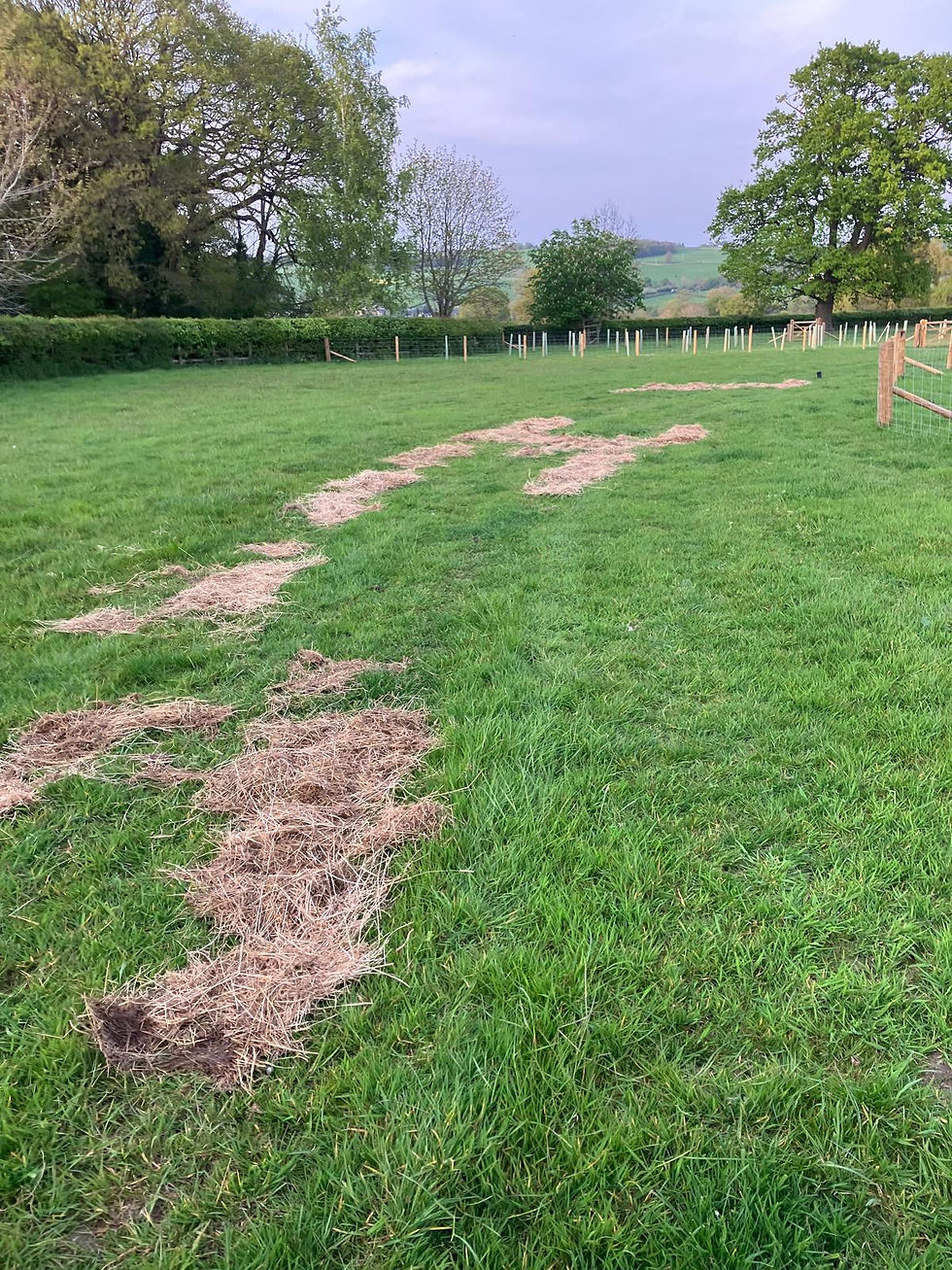
Benefits: Mulching can suppress dominant grasses and protect wildflower seedlings, helping them establish in competitive pastures. Use hay, straw, leaves, lightly composted plant material, or other low-nitrogen organic matter. A thin layer of mulch conserves soil moisture, shields seeds from drying out, and adds gentle nutrients as it breaks down.
Risks: Avoid using hay or materials that might contain cultivated grass seed, as these can introduce unwanted species that outcompete your wildflowers. A mulch layer that is too thick can smother seedlings and create conditions for slugs. Avoid mulch high in nitrogen, as this can favour grasses over wildflowers and reduce biodiversity.
Tips: Species rich meadow hay can be an excellent mulch because it may also introduce additional local wildflower seed. Autumn leaves can also provide a useful low fertility mulch. Avoid nutrient rich composts or hay from improved grassland, as these may encourage vigorous grasses rather than meadow species.
After Sowing: Give Nature Time
Newly establishing meadows often look untidy during their first year. This is completely normal. Many perennial wildflowers invest much of their energy below ground before producing abundant flowers.
Manage newly sown areas gently. If cutting is needed, cut high and remove the cuttings to gradually reduce soil fertility. Try to avoid grazing too early, as young seedlings can easily be pulled from the ground before roots have properly established.
Successful meadow creation is measured over several growing seasons rather than a few months.
Which Method is Best?
There isn't one universally "best" way to establish wildflowers into horse pasture. The most successful approach depends on what is currently limiting wildflower establishment on your land.
Is grass competition the biggest challenge?
Is soil fertility too high?
Do you already have suitable bare patches?
Would yellow rattle help weaken vigorous grasses naturally?
Once you understand the ecological processes involved, choosing an establishment method becomes much simpler. Ecological pasture management isn't about following fixed rules. It's about understanding how plants, soils, horses and management interact, then choosing the approach that best fits your own circumstances.
If you'd like to understand why different pasture management techniques work, rather than simply following generic advice, our educational courses will help you learn how to assess your pasture's ecosystem, understand the ecology beneath your feet, and make confident decisions for your horses, your land and your circumstances.
Key Takeaways
Successful wildflower establishment is about changing the ecological conditions that currently favour grasses.
Different establishment methods solve different problems, so choose the approach that matches your pasture rather than following a single recipe.
Patience is essential. Most species rich horse pastures develop over several growing seasons.
Diverse pasture supports healthier soils, more resilient grazing systems, richer biodiversity and greater opportunities for natural horse behaviour.
Frequently Asked Questions
Can you sow wildflowers into existing horse pasture?
Yes. In many cases you don't need to plough or completely reseed a field. Success depends on reducing grass competition, creating good seed to soil contact and choosing species suited to your soil and management.
When is the best time to sow wildflowers in horse pasture?
Early autumn is often the most reliable time because soil moisture is increasing while grass growth naturally begins to slow. Spring and summer sowing can also work if sufficient moisture is available.
Are wildflowers safe for horses?
Many native meadow wildflowers are suitable for horse pasture when chosen carefully. Always use a horse appropriate seed mix and check competition rules if your horse competes under affiliated regulations.
Can wildflowers help create lower risk grazing for horses prone to laminitis?
Wildflowers are not a treatment for laminitis, and no single plant or seed mix can eliminate risk. However, increasing plant diversity may encourage more varied grazing behaviour and contribute to a more resilient pasture ecosystem. Laminitis risk depends on many interacting factors including horse health, grazing management, pasture composition and environmental conditions.


Comments